Kitchen Island Installation Cost With Seating California
By the KitchenBath Guides Editorial Team — reviewed for accuracy. Last updated October 2026. This article is for informational purposes and reflects typical market pricing; verify current details with licensed contractors before starting any project.
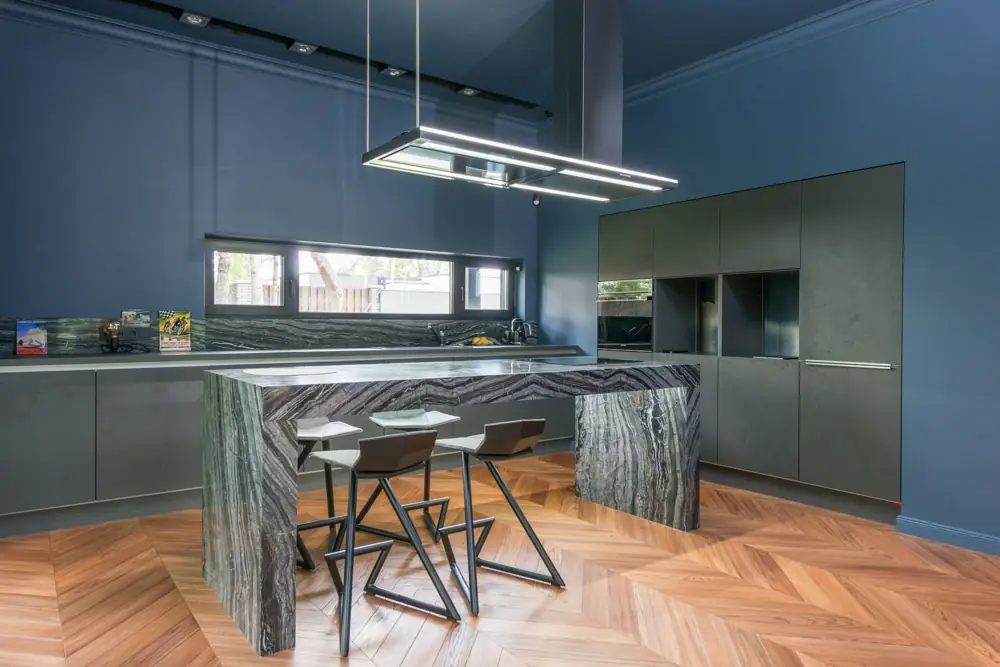
The island with seating is the most-requested kitchen feature in American remodeling — and its price range is wider than it looks, because ‘island’ describes three different projects: a freestanding furniture island, a cabinetry island on existing services, and an island with plumbing, power and seating built in.
This guide prices kitchen island installation with seating for 2026: the three project types, what seating actually adds to each, and the service lines that separate a furniture purchase from a construction project.
Kitchen Island Installation Cost With Seating — At a Glance for US
A kitchen island with seating runs $3,200–$11,000 installed in 2026 — from freestanding furniture islands at the bottom through cabinetry islands with an overhang counter, to full service islands with sink or cooktop and electrical. Seating adds the overhang, the support structure and the extra counter slab — typically 20–35% over a same-size island without seating. This is a realistic planning number for the United States in 2026, not a marketing low-ball.
| Line Item | Typical Range (USD) | What Drives It |
|---|---|---|
| Freestanding furniture island | $3,200–$6,500 | Purchase and delivery; no services |
| Cabinetry island with seating overhang | $5,000–$11,000 | Base cabinets, counter, overhang supports |
| Full service island (plumbing/electrical) | $8,000–$16,000 | Plus sink or cooktop, circuits, permits |
| Seating overhang counter (per running foot) | $150–$350 | Slab, fabrication, support brackets |
| Seating capacity (2 vs 4 seats) | $15–$30 | Percent add for the wider overhang and slab |
Understanding Kitchen Island Installation Cost With Seating
The three island projects carry different trades entirely. The furniture island is a delivery. The cabinetry island needs a installer day, a counter template and fabrication. The service island adds a plumber or electrician, permits in most jurisdictions, and floor work to reach drain lines — often through slab or crawl access that prices the trenching before the island itself.
Seating changes the counter: an overhang deep enough for knees (typically 12–15 inches at counter height, 18 at table height) requires support — brackets, corbels or a steel flat bar hidden in the slab. The fabrication line grows with the overhang; the support line is the part quotes forget until template day. Two-seat islands fit a 6-foot run; four seats need 8 feet or an L-shaped island.
What Moves the Price Up or Down
Island pricing moves on size, services and the counter material. Seating depth is the quiet multiplier — the difference between a 2-foot and 3-foot overhang is slab, support and money.
| Factor | Cost Impact | Detail |
|---|---|---|
| Island length (4–8 ft) | ±40% | Slab, cabinetry and fabrication all scale with length |
| Services in the island | +$2,500–$7,500 | Sink, cooktop, dishwasher or electrical each add trade lines |
| Counter material | ±$800–$3,500 | Quartz vs butcher block vs premium stone at island size |
| Seating depth | +15–30% | Deeper overhangs need support engineering and more slab |
Island Types and What Each Costs
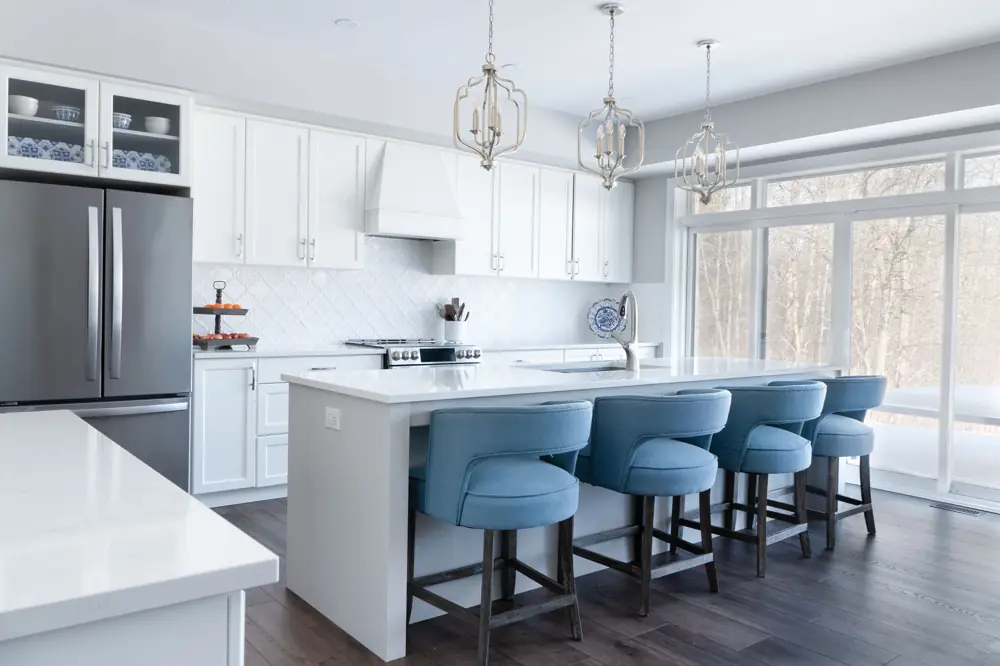
Three island types with seating cover the market. The type decides the trades, the permits and the budget band before design choices matter.
| Option | Description | Best For | Cost Level |
|---|---|---|---|
| Freestanding furniture island | Wheeled or fixed furniture with counter top and stools | Renters, small kitchens, flexible layouts | $3,200–$6,500 |
| Cabinetry island with seating | Base cabinets, stone or wood counter, overhang for 2–4 stools | The standard remodel island | $5,000–$11,000 |
| Full service island | Cabinetry plus sink/cooktop, electrical, permits | Workhorse kitchens, open-plan projects | $8,000–$16,000 |
Each type is a real island with seating; only the middle one prices as a standard remodeling line.
Three Realistic Project Scenarios
The freestanding starter — $3,200–$5,200
A 4-ft furniture island with butcher block top and two stools for a compact kitchen.
- Furniture island purchase — $1,800–$3,200
- Butcher block top — $400–$900
- Two counter stools — $300–$800
Why this matters: the furniture island delivers island function and seating without touching services — the renter and starter answer.
The cabinetry island with seating — $6,500–$10,500
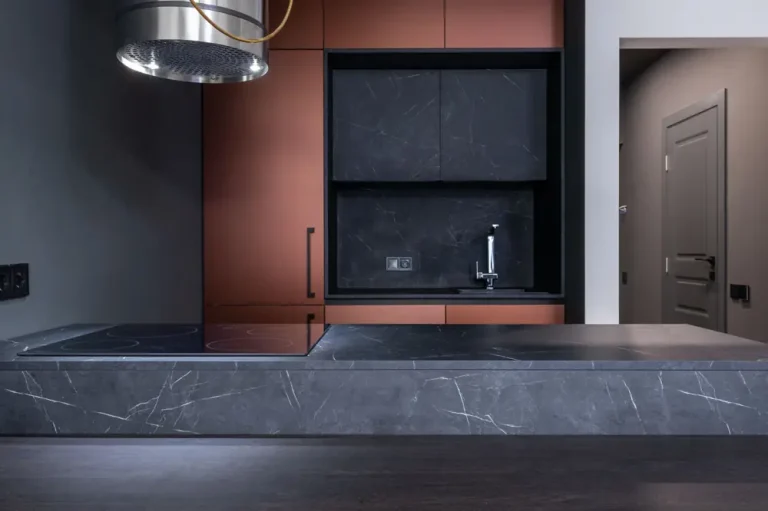
A 6-ft island: base cabinets, quartz counter, 12-inch overhang, three stools.
- Base cabinetry — $2,000–$3,600
- Quartz counter with overhang — $2,200–$3,800
- Support brackets and install — $600–$1,200
- Three stools — $450–$1,200
Why this matters: the standard island project — seating works, storage doubles, and the kitchen’s social center moves.
The full service workhorse — $9,500–$15,500
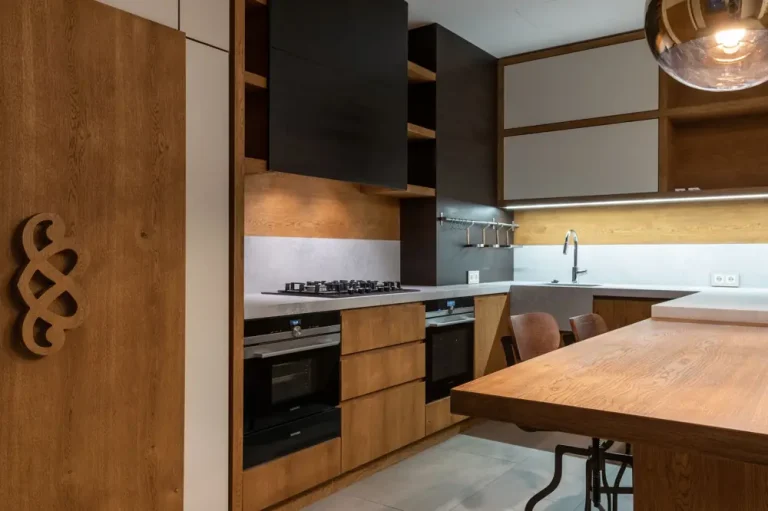
An 8-ft island with sink, dishwasher and seating for four.
- Cabinetry and counter — $4,500–$7,000
- Sink and dishwasher integration — $1,800–$3,200
- Plumbing, electrical, permits — $2,000–$3,800
Why this matters: the service island prices its premium in trades and floor work — the drain line under the slab is the hidden line.
Island quotes differ most on the hidden lines: support, services and floor access. The visible slab is the easy comparison.
Sample Budget Breakdown
The table below shows how a typical mid-range budget for kitchen island installation cost with seating distributes across materials, labor and compliance in the United States. Adjust the percentages to your own scope before using it as a savings target.
| Category | Estimated Amount | Explanation | Optimization Tip |
|---|---|---|---|
| Base cabinetry | $2,000–$4,500 | 30–35% of a cabinetry island | Stock and semi-custom carry island duty well |
| Counter and fabrication | $2,200–$5,000 | 35–40% | Overhang fabrication and support at seating depth |
| Services and permits | $2,000–$3,800 | service islands only | The line separating furniture from construction |
| Seating and hardware | $450–$1,500 | flexible | Stools price anywhere; counter-height matters more than brand |
Every figure above is an indicative 2026 market range. Final quotes move with site conditions, contractor availability and the exact specification you lock in.
From Quote to Completion: the Typical Timeline
Most kitchen island installation cost with seating projects follow the same five-stage rhythm. Knowing the calendar before you sign prevents the two classic frustrations — feeling rushed into a deposit, and being surprised by a mid-project gap while materials arrive.
- Week 1–4: ordering the long-lead items — Cabinets at 4–10 weeks, counters at 2–3 after template, specialty tile and fixtures as they arrive — the calendar is set the day you sign.
- Week 2: permits — Structural, electrical and plumbing permits file in a day and issue in 1–3 weeks where required; inspectors schedule their visits into the project.
- Construction: 3–8 weeks on site — Demo and rough-in week one, cabinet and counter weeks two-to-four, finishes and inspections closing out the tail.
- Final 2 weeks: punch list and close-out — Doors adjusted, caulk cured, final inspections passed, and the lien waiver packet collected before final payment.
- Week 0: scope and three quotes — A measured scope with cabinet counts and fixture list turns phone guesses into comparable quotes; walkthroughs take an hour each.
Smart Ways to Control the Budget
Cost control on kitchen island installation cost with seating is mostly about scope discipline and timing. These are the strategies that consistently deliver the largest savings:
Keep the footprint, change the finishes
Leaving plumbing, gas and walls where they are cuts 15–25% off a full remodel — moving a sink or range is where budgets quietly double.
Advantages:
- Directly reduces the controllable parts of the quote
- No impact on quality or compliance when scoped correctly
Disadvantages:
- You live with a layout the previous owner chose, which for some kitchens is exactly the problem.
- Requires planning lead-time you may not have on urgent timelines
Buy cabinets at the semi-custom tier
Semi-custom fills the gap between stock boxes and full custom: better fit, finish options and soft-close hardware without the 40% custom premium.
Advantages:
- Directly reduces the controllable parts of the quote
- No impact on quality or compliance when scoped correctly
Disadvantages:
- Lead times run 4–10 weeks, longer than the off-the-shelf swap you could do this month.
- Requires planning lead-time you may not have on urgent timelines
Order countertops from the fabricator, not the showroom
Fabricator-direct pricing on the same slab runs 10–20% under showroom markups; templating and one fabrication visit are included either way.
Advantages:
- Directly reduces the controllable parts of the quote
- No impact on quality or compliance when scoped correctly
Disadvantages:
- You coordinate the template date yourself instead of the showroom doing it for you.
- Requires planning lead-time you may not have on urgent timelines
Remodel in the shoulder months
Contractor calendars empty between post-holiday winter and late autumn; January-to-March quotes run noticeably softer than spring.
Advantages:
- Directly reduces the controllable parts of the quote
- No impact on quality or compliance when scoped correctly
Disadvantages:
- You may be without a kitchen island through the holidays if something slips.
- Requires planning lead-time you may not have on urgent timelines
Permits, Rules and Safety
Islands with new circuits or plumbing need electrical and plumbing permits in most US jurisdictions; furniture and cabinetry islands without services need none. Islands over appliances must meet code clearances — 36 inches of walkway minimum, more where drawers face seating.
- Moving plumbing, gas lines or opening walls triggers permits in all five countries covered — unpermitted work resurfaces at resale as a disclosure problem.
- A structural engineer letter is required for wall removal before the permit issues; load-bearing determinations are never a contractor guess.
- Kitchen electrical upgrades (added circuits, panel work) need inspection — and the inspection paperwork is what insurers ask for after a claim.
Maintenance and Long-Term Ownership Costs
The project price is only the first line of the budget. These recurring items are what owners in the United States actually spend money on after the crews leave:
| Task | Frequency | Typical Cost | Why It Matters |
|---|---|---|---|
| Grout and caulk inspection | Yearly | DIY ($10–$40) | Cracked caulk behind sinks and backsplashes is how water reaches cabinets and subfloors. |
| Refrigerator coil cleaning | Twice yearly | DIY (free) | Dust-choked coils raise energy bills and shorten compressor life — 15 minutes with a brush. |
| Range hood filter degreasing | Quarterly | DIY (free) | Grease-loaded filters lose capture efficiency and become a stovetop fire accelerant. |
| Countertop sealing (natural stone) | Yearly | $0 DIY / $120–$250 pro | Unsealed granite and marble stain from oil and wine — a 20-minute seal protects the slab investment. |
Island maintenance concentrates at the overhang — the unsupported slab edge is the chip zone. Stone sealing at the overhang seam and bracket checks under heavy counter material are the annual habits.
Frequently Asked Questions
How much overhang do I need for island seating?
12–15 inches for counter-height seating (knees fit), 18 inches at table height; beyond 15 inches at counter height, supports must carry the cantilever.
Can I add an island without remodeling the kitchen?
Yes — furniture islands and cabinetry islands install without touching services in a day or two; only service islands need the full trade complement.
Does an island with seating need permits?
Only if it adds plumbing or electrical circuits; the seating structure itself is unregulated, though code clearances apply to any island.
Is an island worth the cost at resale?
Seating islands rank among the highest-desired kitchen features in buyer surveys; in mid-range homes they typically return their cost in marketability if not in appraisal line-items.
Summary
Planning kitchen island installation cost with seating in the United States starts with an honest range — $3,200–$11,000 for the scenarios most households actually install — then works backwards through island type selection and service scope.
The island budget is a type decision: furniture, cabinetry or services — each a different project with the same name. Price the overhang honestly, support what needs supporting, and trench before the slab is templated. Collect at least three itemised quotes, confirm the permit path before signing, and hold a 10–15% contingency for site surprises. Those three habits protect more budget than any product choice.
Related Guides
- Kitchen Remodel Labor vs Materials Cost Breakdown Texas
- Open Plan Kitchen Wall Removal Structural Cost UK
- Single Storey Kitchen Extension Cost London 2026
- Kitchen Renovation Timeline How Many Weeks Guide USA
- Kitchen Remodel DIY vs Contractor Cost Comparison USA
- Kitchen Remodel ROI Resale Value Recoup 2026 USA