Kitchen Sink Plumbing Relocation Rough-In Cost Illinois
By the KitchenBath Guides Editorial Team — reviewed for accuracy. Last updated October 2026. This article is for informational purposes and reflects typical market pricing; verify current details with licensed contractors before starting any project.
Moving the sink is the plumbing decision that reprices a kitchen remodel — the drain, the vent, and the supply lines all relocate with it, and the floor between them decides the access cost. Rough-in is the hidden 80% of the relocation price.
This guide prices kitchen sink plumbing relocation rough-in for 2026: the drain and vent work by floor type, the supply-side lines, and the permit-inspection structure that every jurisdiction applies to drain moves.
Kitchen Sink Plumbing Relocation Rough-In Cost — At a Glance for US
Kitchen sink relocation rough-in runs $2,200–$7,500 in 2026 — $2,200–$5,000 for drain and vent work with good access, $3,500–$7,500 where slab trenching or long vent runs price the access. The fixture set (sink, faucet, disposal, dishwasher tie-in) adds on top; the rough-in is the project underneath. This is a realistic planning number for the United States in 2026, not a marketing low-ball.
| Line Item | Typical Range (USD) | What Drives It |
|---|---|---|
| Drain line relocation (crawlspace/basement access) | $1,200–$2,800 | The core line — re-route to new position |
| Drain line relocation (slab trench) | $2,500–$5,500 | Concrete cutting, trenching, re-pour |
| Vent extension/re-route | $400–$1,400 | Code venting at the new position |
| Supply lines relocation (hot/cold) | $300–$900 | PEX runs to the new position |
| Permit and inspection | $150–$500 | Universal on drain moves |
Understanding Kitchen Sink Plumbing Relocation Rough-In Cost
The access structure prices the job: crawlspace and basement homes re-route drains under the floor at trade-day rates; slab homes cut concrete, trench, and re-pour — adding $1,500–$3,000 of concrete work to the same plumbing. The vent is the second decision: every relocated sink needs code-compliant venting, and distance from the stack drives the cost.
Supply lines are the cheap side: PEX runs to the new position price $300–$900 including shutoffs. The dishwasher tie-in relocates with the sink loop in most layouts — the air gap or high-loop the code requires prices inside the connection set. The rough-in is complete when the drain holds water at test and the inspector signs the top-out visit.
What Moves the Price Up or Down
The relocation band moves on floor structure, distance to stack, and vent path. The plumbing itself is the stable part.
| Factor | Cost Impact | Detail |
|---|---|---|
| Floor structure (slab vs access) | ±$1,500–$3,000 | The trenching line — the access decision |
| Distance to the main stack | ±$400–$1,200 | Drain slope and vent runs scale with it |
| Wall structure on the path | ±$300–$900 | Island venting and wall re-routing complexities |
| Fixture set at the new position | ±$600–$1,800 | Sink, faucet, disposal, dishwasher connections |
Relocation Projects by Floor Structure
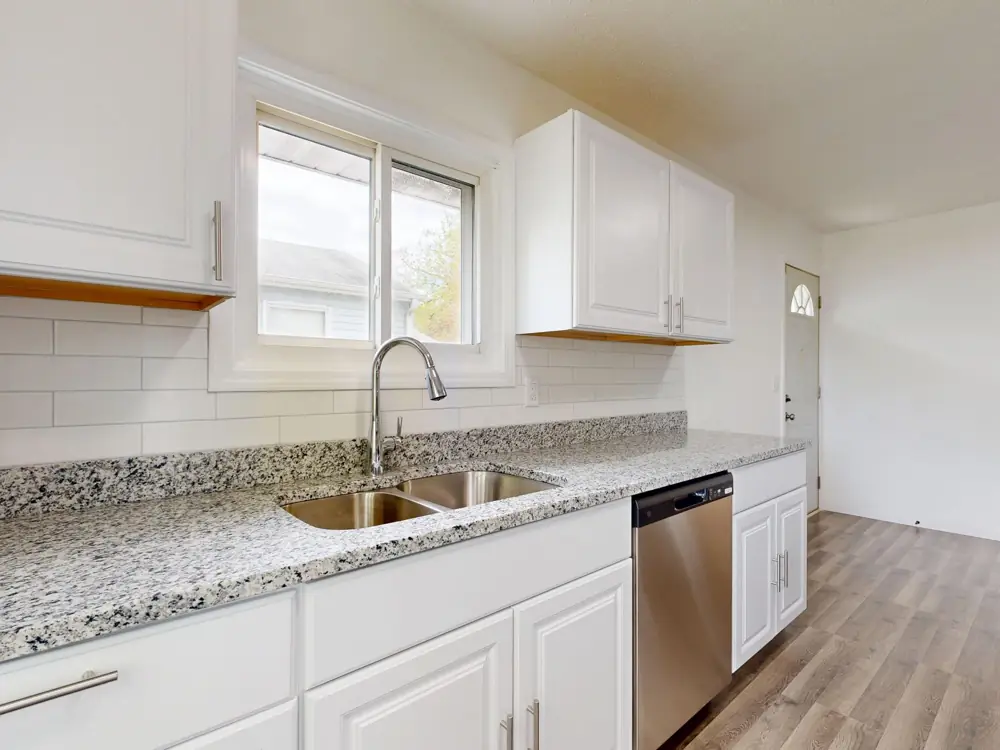
The same sink move prices differently over a crawlspace, a basement, and a slab — the structure is the scope.
| Option | Description | Best For | Cost Level |
|---|---|---|---|
| Crawlspace/basement re-route | Under-floor access, drain and vent from below | The affordable relocation | $2,200–$4,500 |
| Slab trench relocation | Concrete cutting, trenching, re-pour with the drain | Slab homes, island sinks | $3,500–$7,500 |
| Island sink conversion | Loop venting under slab, dedicated pump options | Kitchen islands — the premium move | $4,000–$8,500 |
The structure under the kitchen prices the move before the plumber does — check the floor before planning the layout.
Three Realistic Project Scenarios
The crawlspace move — $2,400–$3,800
A sink moving 6 feet along the wall, crawlspace below.
- Drain re-route from below — $1,100–$1,800
- Vent extension — $400–$700
- Supply lines and shutoffs — $350–$600
- Permit and inspections — $200–$350
Why this matters: the crawlspace move is the honest relocation — access makes every line cheaper than it looks from above.
The slab-trench project — $3,800–$5,800
The same move over a concrete slab: cut, trench, re-pour.
- Concrete cutting and removal — $900–$1,600
- Drain and vent in trench — $1,200–$2,000
- Re-pour and finish — $600–$1,200
- Supplies and permit — $700–$1,100
Why this matters: slab work prices the concrete as its own trade — the plumbing is stable, the access is not.
The island conversion — $4,500–$7,200
A sink relocated into a new island with loop venting.
- Slab trench to island — $1,500–$2,600
- Island loop-vent system — $700–$1,300
- Supplies and connections — $800–$1,400
- Permit and fixture set — $900–$1,500
Why this matters: the island sink is the premium move — venting code under a slab is the specialist line the project turns on.
Relocation quotes that skip the trench line or the vent work are not cheaper — they are incomplete.
Sample Budget Breakdown
The table below shows how a typical mid-range budget for kitchen sink plumbing relocation rough-in cost distributes across materials, labor and compliance in the United States. Adjust the percentages to your own scope before using it as a savings target.
| Category | Estimated Amount | Explanation | Optimization Tip |
|---|---|---|---|
| Drain and vent rough-in | $1,200–$3,500 | 45–55% of the relocation | The core licensed work — access prices it |
| Access work (slab cutting, wall opening) | $600–$2,800 | 20–30% where applicable | The structure line, not the plumbing line |
| Supplies and fixture set | $600–$1,800 | 15–25% | PEX runs, shutoffs, connections at the new position |
| Permits and inspections | $150–$500 | the compliance floor | Drain moves are inspected everywhere covered |
Every figure above is an indicative 2026 market range. Final quotes move with site conditions, contractor availability and the exact specification you lock in.
From Quote to Completion: the Typical Timeline
Most kitchen sink plumbing relocation rough-in cost projects follow the same five-stage rhythm. Knowing the calendar before you sign prevents the two classic frustrations — feeling rushed into a deposit, and being surprised by a mid-project gap while materials arrive.
- Week 2: permits — Structural, electrical and plumbing permits file in a day and issue in 1–3 weeks where required; inspectors schedule their visits into the project.
- Construction: 3–8 weeks on site — Demo and rough-in week one, cabinet and counter weeks two-to-four, finishes and inspections closing out the tail.
- Final 2 weeks: punch list and close-out — Doors adjusted, caulk cured, final inspections passed, and the lien waiver packet collected before final payment.
- Week 0: scope and three quotes — A measured scope with cabinet counts and fixture list turns phone guesses into comparable quotes; walkthroughs take an hour each.
- Week 1–4: ordering the long-lead items — Cabinets at 4–10 weeks, counters at 2–3 after template, specialty tile and fixtures as they arrive — the calendar is set the day you sign.

Smart Ways to Control the Budget
Cost control on kitchen sink plumbing relocation rough-in cost is mostly about scope discipline and timing. These are the strategies that consistently deliver the largest savings:
Get three itemised quotes, line by line
The same kitchen scope quotes $10,000 apart between contractors; only line-level comparison shows whether the gap is labor, materials or padding.
Advantages:
- Directly reduces the controllable parts of the quote
- No impact on quality or compliance when scoped correctly
Disadvantages:
- Takes two weeks of evenings and a spreadsheet nobody enjoys building.
- Requires planning lead-time you may not have on urgent timelines
Keep the footprint, change the finishes
Leaving plumbing, gas and walls where they are cuts 15–25% off a full remodel — moving a sink or range is where budgets quietly double.
Advantages:
- Directly reduces the controllable parts of the quote
- No impact on quality or compliance when scoped correctly
Disadvantages:
- You live with a layout the previous owner chose, which for some kitchens is exactly the problem.
- Requires planning lead-time you may not have on urgent timelines
Buy cabinets at the semi-custom tier
Semi-custom fills the gap between stock boxes and full custom: better fit, finish options and soft-close hardware without the 40% custom premium.
Advantages:
- Directly reduces the controllable parts of the quote
- No impact on quality or compliance when scoped correctly
Disadvantages:
- Lead times run 4–10 weeks, longer than the off-the-shelf swap you could do this month.
- Requires planning lead-time you may not have on urgent timelines
Order countertops from the fabricator, not the showroom
Fabricator-direct pricing on the same slab runs 10–20% under showroom markups; templating and one fabrication visit are included either way.
Advantages:
- Directly reduces the controllable parts of the quote
- No impact on quality or compliance when scoped correctly
Disadvantages:
- You coordinate the template date yourself instead of the showroom doing it for you.
- Requires planning lead-time you may not have on urgent timelines
Permits, Rules and Safety
Drain relocation requires plumbing permits with inspections in every jurisdiction covered — the top-out (rough-in) and final visits are the standard. The permit protects the resale: unpermitted drain moves surface at inspection as the deal-slowing item every seller dreads.
- Kitchen electrical upgrades (added circuits, panel work) need inspection — and the inspection paperwork is what insurers ask for after a claim.
- Moving plumbing, gas lines or opening walls triggers permits in all five countries covered — unpermitted work resurfaces at resale as a disclosure problem.
- A structural engineer letter is required for wall removal before the permit issues; load-bearing determinations are never a contractor guess.
Maintenance and Long-Term Ownership Costs
The project price is only the first line of the budget. These recurring items are what owners in the United States actually spend money on after the crews leave:
| Task | Frequency | Typical Cost | Why It Matters |
|---|---|---|---|
| Refrigerator coil cleaning | Twice yearly | DIY (free) | Dust-choked coils raise energy bills and shorten compressor life — 15 minutes with a brush. |
| Range hood filter degreasing | Quarterly | DIY (free) | Grease-loaded filters lose capture efficiency and become a stovetop fire accelerant. |
| Countertop sealing (natural stone) | Yearly | $0 DIY / $120–$250 pro | Unsealed granite and marble stain from oil and wine — a 20-minute seal protects the slab investment. |
| Cabinet hinge and drawer adjustment | Yearly | DIY (free) | Soft-close hardware drifts out of alignment with use; a screwdriver tune keeps doors closing the way they did in month one. |
Relocated drains carry standard maintenance with two additions: the re-pour concrete cures and settles (monitor the floor finish above it), and island loop-vents need the cleanout accessible — the one fitting that clogs first when a disposal is involved.
Frequently Asked Questions
How much does it cost to move a kitchen sink?
$2,200–$7,500 for the rough-in by floor structure — crawlspace access at the bottom of the band, slab trenching at the top; island conversions with loop venting price at the premium end.
Why is moving a sink so expensive?
The drain and vent are structure-level work: code slope, venting, and under-floor access. The fixture is cheap; the path it drains through is not.
Can a sink be moved in a slab foundation?
Yes — the concrete is cut, the drain trenched and re-poured at $3,500–$7,500; island sinks need loop venting under the slab, the specialist version of the move.
Do I need a permit to relocate kitchen plumbing?
Yes — drain and vent relocation is permitted and inspected in every jurisdiction covered. The permit and its closed-out paperwork are what keep the resale inspection quiet.
Summary
Planning kitchen sink plumbing relocation rough-in cost in the United States starts with an honest range — $2,200–$7,500 for the scenarios most households actually install — then works backwards through floor-structure pricing and code-venting discipline.
The sink move prices by what is under the floor: check the structure before the layout, budget the trench honestly, and vent to code. The rough-in is the project — the sink is just the fixture that marks it. Collect at least three itemised quotes, confirm the permit path before signing, and hold a 10–15% contingency for site surprises. Those three habits protect more budget than any product choice.
Related Guides
- Kitchen Remodel Budget Tiers Basic Mid High End Canada
- Condo Kitchen Remodel Cost Rules and Approval Fees Florida
- Kitchen Renovation Permit Requirements Cost by State USA
- Kitchen Remodel Cost 10×10 Kitchen USA 2026 Guide
- Kitchen Renovation Cost Per Square Foot UK Guide
- Average Kitchen Remodel Cost Mid Range Ontario Canada