Under Cabinet Lighting Hardwired Installation Cost New York
By the KitchenBath Guides Editorial Team — reviewed for accuracy. Last updated October 2026. This article is for informational purposes and reflects typical market pricing; verify current details with licensed contractors before starting any project.
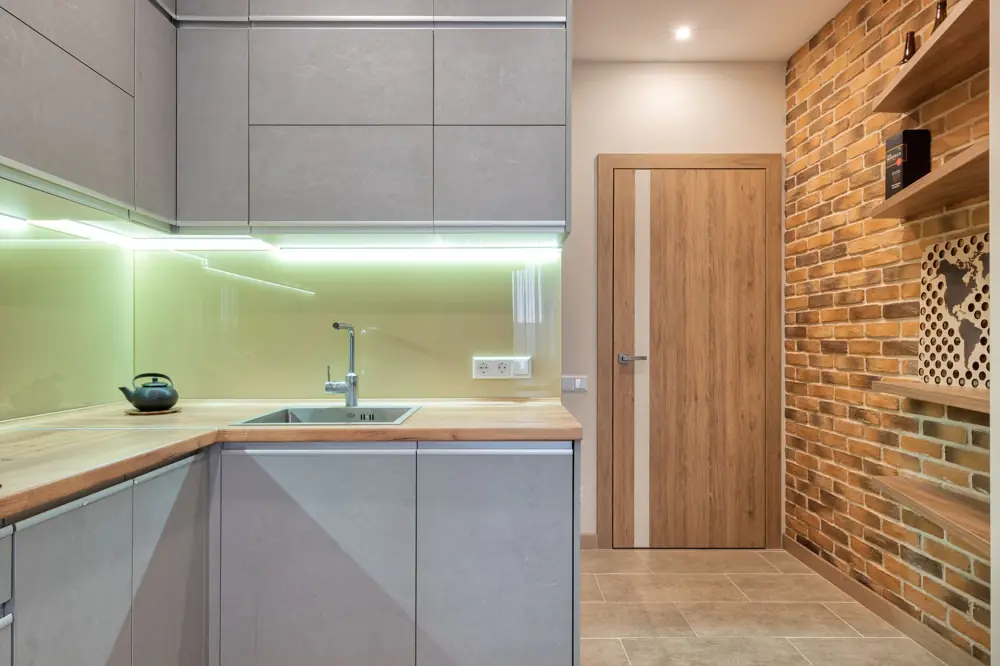
Under-cabinet lighting is the kitchen’s task layer — the counters’ worklight hiding beneath the upper cabinets. Hardwired installation prices the proper route: circuits, switching and the concealed wiring that professional work carries.
This guide prices hardwired under-cabinet lighting for 2026: the fixture classes, the electrical work the hardwired route requires, and the plug-in comparison that frames the decision.
Under Cabinet Lighting Hardwired Installation Cost — At a Glance for US
Hardwired under-cabinet lighting runs $400–$2,200 installed in 2026 — $400–$1,100 for typical kitchens (LED strips or pucks, one circuit, wall switch) and $1,100–$2,200 for multi-zone builds with dimming and smart control. The plug-in comparison at $80–$300 prices the DIY route the hardwired premium upgrades. This is a realistic planning number for the United States in 2026, not a marketing low-ball.
| Line Item | Typical Range (USD) | What Drives It |
|---|---|---|
| LED strip/puck fixtures (per kitchen) | $100–$500 | The fixture layer by class |
| Hardwired circuit and switching | $200–$600 | Licensed electrical work |
| Dimming and control layers | $100–$400 | Zone dimmers to smart control |
| In-wall wiring concealment | $100–$400 | The professional signature |
| Typical kitchen (single zone) | $400–$1,100 | All-in hardwired |
Understanding Under Cabinet Lighting Hardwired Installation Cost
The hardwired route prices the proper installation: a switched circuit (the licensed work at $200–$600), in-wall wire runs to each cabinet run ($100–$400 in concealment), and the LED fixture layer ($100–$500 by class — strips for continuity, pucks for pools of light). The result: the task lighting that switches with the kitchen, dims with the evening, and shows no cords.
The plug-in comparison frames the value: $80–$300 in fixtures and cords — the DIY route that plugs into existing outlets, controls at the fixture or a remote, and shows its wiring honestly. The hardwired premium ($300–$900 above plug-in) buys the switching integration, the concealed runs, and the resale-grade installation. Multi-zone builds with dimming extend the hardwired range to $2,200 — the premium the task-lighting control deserves.
What Moves the Price Up or Down
The hardwired decision moves on kitchen scope (renovation timing prices it naturally), control appetite and the cord tolerance the plug-in route carries.
| Factor | Cost Impact | Detail |
|---|---|---|
| Renovation timing (walls open vs closed) | ±$150–$500 | The natural-install economics |
| Control appetite (switch/dim/smart) | ±$100–$400 | The layers above the circuit |
| Fixture class (strips vs pucks vs bars) | ±$100–$350 | The light-quality ladder |
| Zone count | ±$150–$450 per zone | The multi-zone structure |
Under-Cabinet Routes and Classes
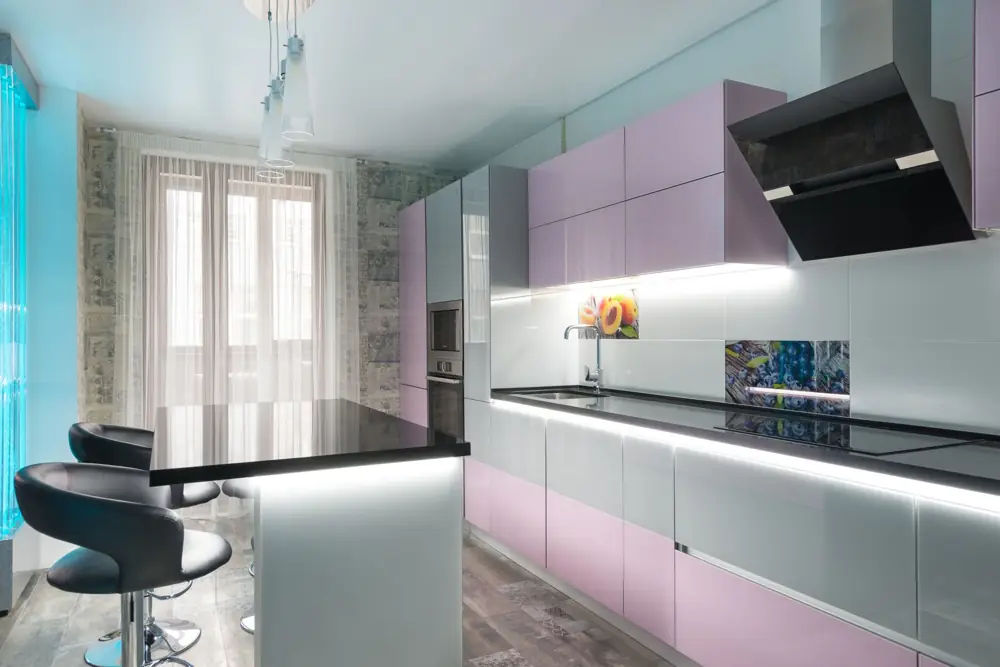
The market prices honest routes:
| Option | Description | Best For | Cost Level |
|---|---|---|---|
| Plug-in strips (DIY) | Outlet-powered, fixture-controlled | The budget route | $80–$300 |
| Hardwired single-zone | Switched circuit, concealed runs | The professional standard | $400–$1,100 |
| Hardwired multi-zone with dimming | Zoned circuits, dimming or smart control | The premium task layer | $1,100–$2,200 |
The plug-in route prices the function; the hardwired route prices the integration — renovation timing selects naturally.
Three Realistic Project Scenarios
The renovation-timing install — $500–$900
Under-cabinet lighting wired during a kitchen renovation.
- Circuit and fixtures (walls open) — $400–$700
- Switching and concealment — $100–$200
Why this matters: renovation timing prices hardwiring at its best — walls open, runs natural, the install riding the project.
The standalone retrofit — $700–$1,400
Hardwired lighting added to a finished kitchen.
- Circuit and in-wall fishing — $300–$700
- Fixtures and switching — $250–$500
Why this matters: the retrofit prices the wall-closed work — the wire-fishing hours the renovation timing would have saved.
The smart-zone premium — $1,400–$2,100
Multi-zone dimming with smart control across three cabinet runs.
- Zoned circuits and fixtures — $900–$1,400
- Smart dimming and setup — $400–$600
Why this matters: the zone structure prices the control — task light by area, evening modes, the layer smart lighting delivers.
Hardwired comparisons price by timing: walls-open installs ride the renovation; retrofit prices the fishing.
Sample Budget Breakdown
The table below shows how a typical mid-range budget for under cabinet lighting hardwired installation cost distributes across materials, labor and compliance in the United States. Adjust the percentages to your own scope before using it as a savings target.
| Category | Estimated Amount | Explanation | Optimization Tip |
|---|---|---|---|
| Circuit and electrical labor | $200–$700 | the licensed core | The switched circuit the route requires |
| Fixture layer | $100–$500 | by class | Strips, pucks, or bars — the light quality |
| Control and zoning | $100–$600 | the appetite ladder | Switch, dimmer, or smart zone control |
Every figure above is an indicative 2026 market range. Final quotes move with site conditions, contractor availability and the exact specification you lock in.
From Quote to Completion: the Typical Timeline
Most under cabinet lighting hardwired installation cost projects follow the same five-stage rhythm. Knowing the calendar before you sign prevents the two classic frustrations — feeling rushed into a deposit, and being surprised by a mid-project gap while materials arrive.
- Fabrication: 5–10 business days — Cutouts, edging and polish happen at the shop; quartz and granite run similar shop times.
- Install day: 2–4 hours — Set, seam, seal (granite) and caulk; sinks usually mount the same visit, plumbing the day after.
- Day 0: measure and quote — Fabricators quote from your cabinet plan; two or three shops on the same layout is a half-day of appointments.
- Day 1–5: slab selection — Choose at the yard or showroom; the slab you saw is the slab you get — reserve it in writing.
- Day 5–15: template — Digital templating after cabinets are set and leveled; an hour on site, and the file goes to the shop.

Smart Ways to Control the Budget
Cost control on under cabinet lighting hardwired installation cost is mostly about scope discipline and timing. These are the strategies that consistently deliver the largest savings:
Price per installed square foot, not per slab
Fabricators quote slab-plus-fabrication; comparing installed square-foot pricing across three shops normalizes the waste factor each one hides.
Advantages:
- Directly reduces the controllable parts of the quote
- No impact on quality or compliance when scoped correctly
Disadvantages:
- Requires measuring your actual layout including sink cutouts and corners.
- Requires planning lead-time you may not have on urgent timelines
Choose a level-2 granite or a mid-tier quartz
Granite price tiers run on rarity, not durability — a level-2 granite performs identically to exotic slabs at a third of the price; mid-tier quartz carries the same warranty as premium colors.
Advantages:
- Directly reduces the controllable parts of the quote
- No impact on quality or compliance when scoped correctly
Disadvantages:
- The exotic patterns and named colors stay in the showroom.
- Requires planning lead-time you may not have on urgent timelines
Bundle removal with installation
Countertop installers remove the old tops for a nominal fee inside the install day; a separate demo day from a handyman doubles that line.
Advantages:
- Directly reduces the controllable parts of the quote
- No impact on quality or compliance when scoped correctly
Disadvantages:
- Your kitchen loses its counters for a day longer while schedules align.
- Requires planning lead-time you may not have on urgent timelines
Template with cabinets already leveled
Templating over unleveled cabinets forces fabricator shims and scribing — the labor shows up on the invoice; a leveled base is a free fix before the templator arrives.
Advantages:
- Directly reduces the controllable parts of the quote
- No impact on quality or compliance when scoped correctly
Disadvantages:
- Requires the cabinet install to be actually finished, not nearly finished.
- Requires planning lead-time you may not have on urgent timelines
Permits, Rules and Safety
Hardwired lighting requires the electrical permit (new circuits and switching) — standard licensed-electrician scope; the plug-in route requires nothing. The permit-and-inspection layer prices into the resale-grade installation the hardwired route delivers.
- Countertop-only replacements almost never require permits — but the sink plumbing reconnection may, depending on jurisdiction and scope.
- Under-counter sink mounts and cooktop circuit changes can pull the work into electrical or plumbing inspection territory in strict jurisdictions.
- Weight is rarely a permit issue, but 150+ lb stone slabs over cantilevered islands sometimes draw an engineer letter request from cautious installers.
Maintenance and Long-Term Ownership Costs
The project price is only the first line of the budget. These recurring items are what owners in the United States actually spend money on after the crews leave:
| Task | Frequency | Typical Cost | Why It Matters |
|---|---|---|---|
| Sink mounting inspection | Yearly | DIY (free) | Undermount sink clips and silicone joints carry 150 lbs of basin; failed mounts damage cabinets below. |
| Stone sealing (granite, marble, quartzite) | Yearly | $0 DIY / $100–$200 pro | The water-bead test tells you when the sealer is spent — beads that soak in mean it is time. |
| Seam and caulk inspection | Yearly | DIY ($5–$15) | Seams flex with cabinet settling; flexible color-matched caulk at the seam keeps liquids out of the joint. |
| Edge chip repair | As needed | $150–$350 pro | Stone chips at sink and edge profiles repair nearly invisibly with color-matched epoxy — small repairs price far under replacement. |
LED maintenance is replacement math: the strips and pucks carry 25,000–50,000-hour lives — decade-plus at kitchen hours. The driver-and-adapter layer (plug-in especially) prices the failure points; hardwired systems carry their drivers in the fixture class that outlasts them.
Frequently Asked Questions
How much does hardwired under-cabinet lighting cost?
$400–$1,100 for typical single-zone kitchens; $1,100–$2,200 for multi-zone builds with dimming — against $80–$300 for the plug-in DIY route the premium upgrades.
Is hardwired under-cabinet lighting worth it?
During renovations — yes, the walls-open economics price it naturally; in finished kitchens, the cord-free result and resale-grade installation price the retrofit premium; the plug-in route honestly serves the budget-and-reversible cases.
What is the best under-cabinet lighting?
LED strips for continuous task light, pucks for pools — the class ladder pricing light quality; hardwired control (switch or dimmer) delivers the integration the fixture class rides on.
Can I convert plug-in under-cabinet lights to hardwired?
Only fixture-class products designed for it — the conversion prices as the hardwired retrofit: licensed circuit work and in-wall runs; plug-in strips designed as plug-in stay that way honestly.
Summary
Planning under cabinet lighting hardwired installation cost in the United States starts with an honest range — $400–$2,200 for the scenarios most households actually install — then works backwards through timing-integrated hardwiring.
Under-cabinet lighting prices the integration: hardwired circuits and concealed runs during renovations, the plug-in function at the budget tier, the zoned control at the premium. Time the hardwiring to the walls-open window the kitchen offers — the task layer that switches with the kitchen it serves. Collect at least three itemised quotes, confirm the permit path before signing, and hold a 10–15% contingency for site surprises. Those three habits protect more budget than any product choice.
Related Guides
- Countertop Edge Profiles Cost Comparison Guide USA
- Recycled Glass Countertops Cost Per Square Foot New Zealand
- Quartz Countertops Cost Per Square Foot Installed USA 2026
- Granite vs Quartz Countertops Cost Comparison UK
- Marble Countertops Cost Per Square Foot Ontario Canada
- Butcher Block vs Quartz Countertop Cost Comparison Australia